Shooting Blind
Unfortunately, my vision issues got worse before they got better.
Blurry vision turned into multiple trips to the eye doctor, injections into my eyeball (not fun), and two surgeries to repair retinal tears. So 2025 was a bit of a blur. Literally.
I had a few months where it was very difficult to even look at a computer screen. Work slowed down. My own writing was one of the first things to slip. But I’ve missed it. And I’ve missed you.
I’m easing back into the flow now, and I wanted to tell you a little about a new project I’ve been working on.
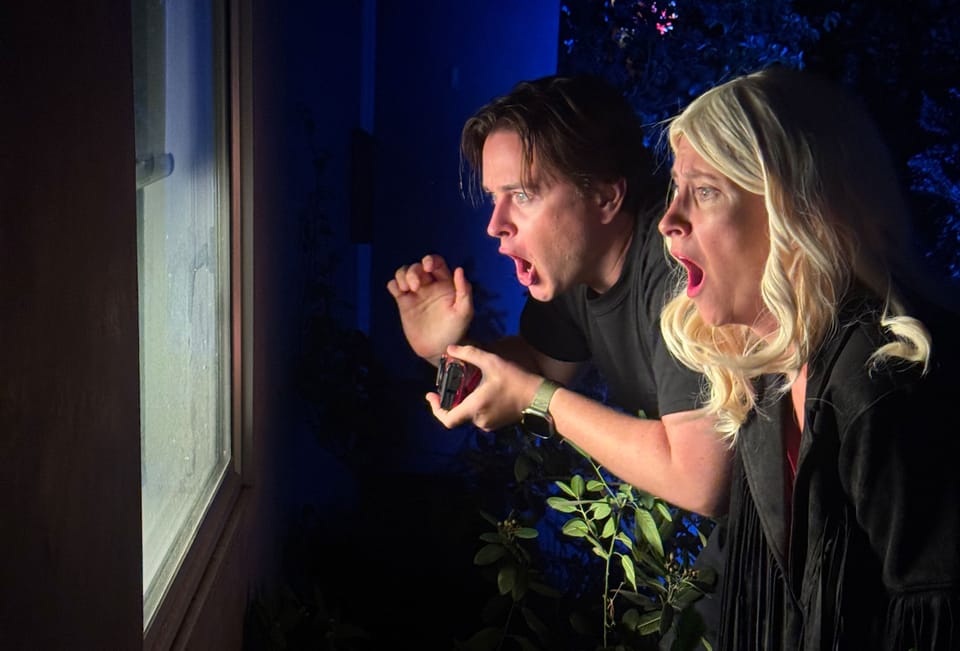
Right before the 2025 holiday season, I wrapped shooting four episodes of a scripted comedy series.This will be coming to YouTube sometime later this year. I want to get more episodes in the can first.
I’m excited to experiment with scripted content on YouTube. But I’m even more excited to be making creative work again. This is a return to some of the things I put on hold when we were building Yoga With Adriene and Hilah Cooking. And a reminder that none of us have forever to do the things we care about.
A New Kind of Format (Maybe?)
The idea behind this new channel isn’t just to make a series. It’s to figure out a whole new way of formatting story-driven content for YouTube.
Not a short film. Not a traditional sitcom. Not a sketch comedy video. But something that borrows elements from all three.
I’ve always been obsessed with formats. I love figuring out the container that holds the idea. And right now, I don’t think we’ve fully discovered what the right container is for scripted narrative content on YouTube.
The experiment: what happens if we build a channel that’s designed from the start to be modular? Where each show can live on its own and play nicely with the others? Where we can develop and produce quickly—without needing six months and a team of twenty just to get one episode out?
That’s the real challenge. Not just making something good—but making something good fast enough to keep publishing on a regular basis. That’s what I'm trying to crack.
The Test Shoot
Before we committed to five days of nonstop shooting, we did a run-through.
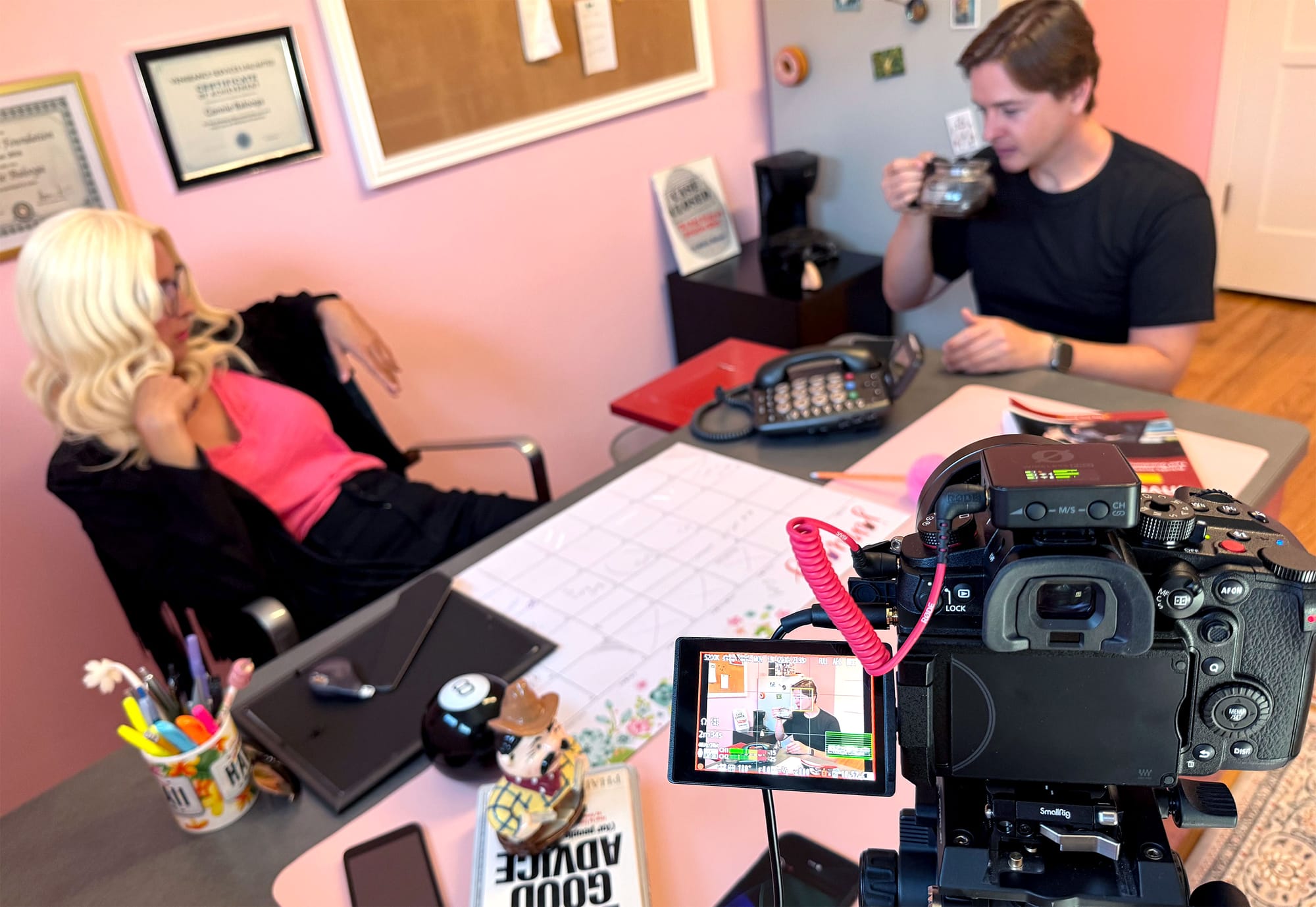
Nothing fancy. Just a couple of hours on a random afternoon after rehearsals. We shot with a Lumix GH7 and an iPhone. No lights. No gear. No pressure.
We blocked a scene, ran lines with the actors, and figured out shots on the fly. I was shooting handheld, running around like a one-person film school. It reminded me of my much younger days, making videos with whatever camcorder we could get our hands on.
And that little window of experimentation turned out to be massively important.
We shot one of the episodes start to finish. Not polished, not perfect, just blocked and executed. And in doing that, we discovered a bunch of things we wouldn’t have found if we’d just been sitting around making shot lists or drawing storyboards. Pacing, blocking, tone—it all clicked differently once we were actually doing it.
I also sadly learned that my eye sight wasn’t nearly as good as I thought it was. I was using the tiny built-in monitor on my Lumix GH7, and it turned out I had seriously underexposed the footage. Luckily, the autofocus performed great!
We were able to recover it in post—but it was a good reminder that, yeah, I need a proper external monitor if I’m going to shoot four of these in a week.
That test shoot was invaluable. It made everything we did later faster, clearer, and better. And it gave me something else, too: increasing confidence that this weird little project might actually work.
Green Light.
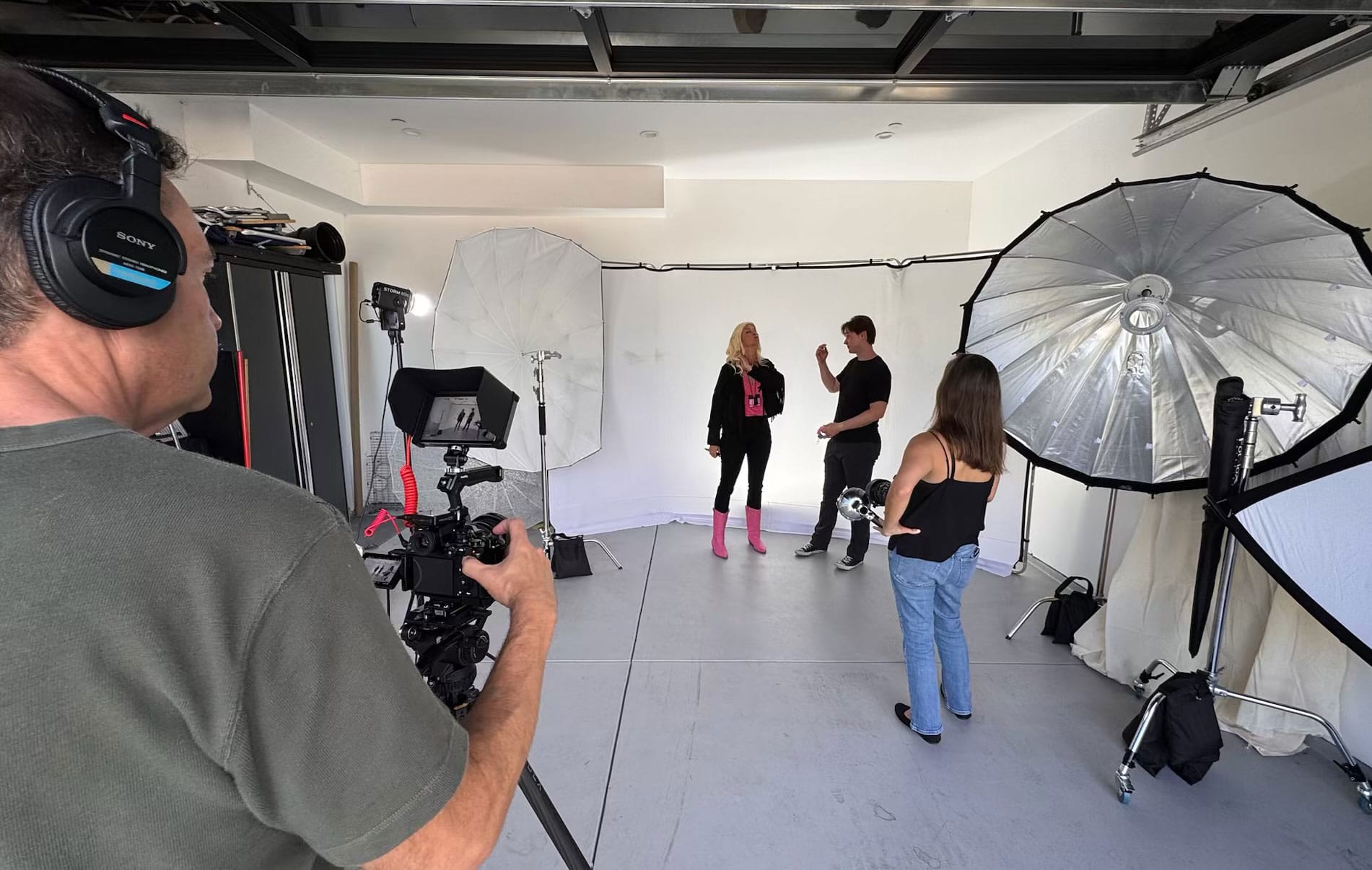
We told ourselves we were going to do this over the summer time. And summer was almost over. So we green-lit ourselves. We put the shoot on the schedule. Five shoot days. Four episodes. Minimal crew. Small cast. Tight locations.
We shot fast. Way faster than I’d ever recommend. But the idea behind this series isn’t to make perfect little films—it’s to figure out how to build something that can keep going. Something sustainable, repeatable and most importantly: fun.
That means testing how fast we can move without the quality falling apart? What actually slows us down versus what feels like it might.
We weren’t precious about anything. If a location didn’t work, we changed it. If a shot wasn’t clicking, we moved on. We had scripts, yes. The actors were rehearsed. But we gave ourselves permission to adapt.
By the end of the week, we had four in the can. And the experience was reinvigorating and awesome. They’re not done-done, but the bones are there—and more importantly, the format is starting to take shape.
Now we’re editing in FCP, polishing things up, and prepping for the next shoot—another series that’ll live alongside this one on the same channel. The experimentation continues.
Sometimes You Just Have to Hit Record
It probably sounds a little crazy (or even stupid) that we produced all this with such a small team.
Eventually, we’ll bring on more help. Someone to shoot. An editor. We’ll get more efficient, raise the quality bar, maybe even release more frequently. That’s the plan.
But this first step? It had to be now.
We said we were going to make something in 2025. And 2025 was running out. So we cleared the week, locked it in, and did the thing.
There’s something important in that. Waiting until things are perfect is one of the fastest ways to never start.
So we didn’t wait. We started. Now we’ve gotta keep going.